
Range Safety & Proficiency.
Range etiquette, supervised fundamentals, and a clear path toward more confident practice.
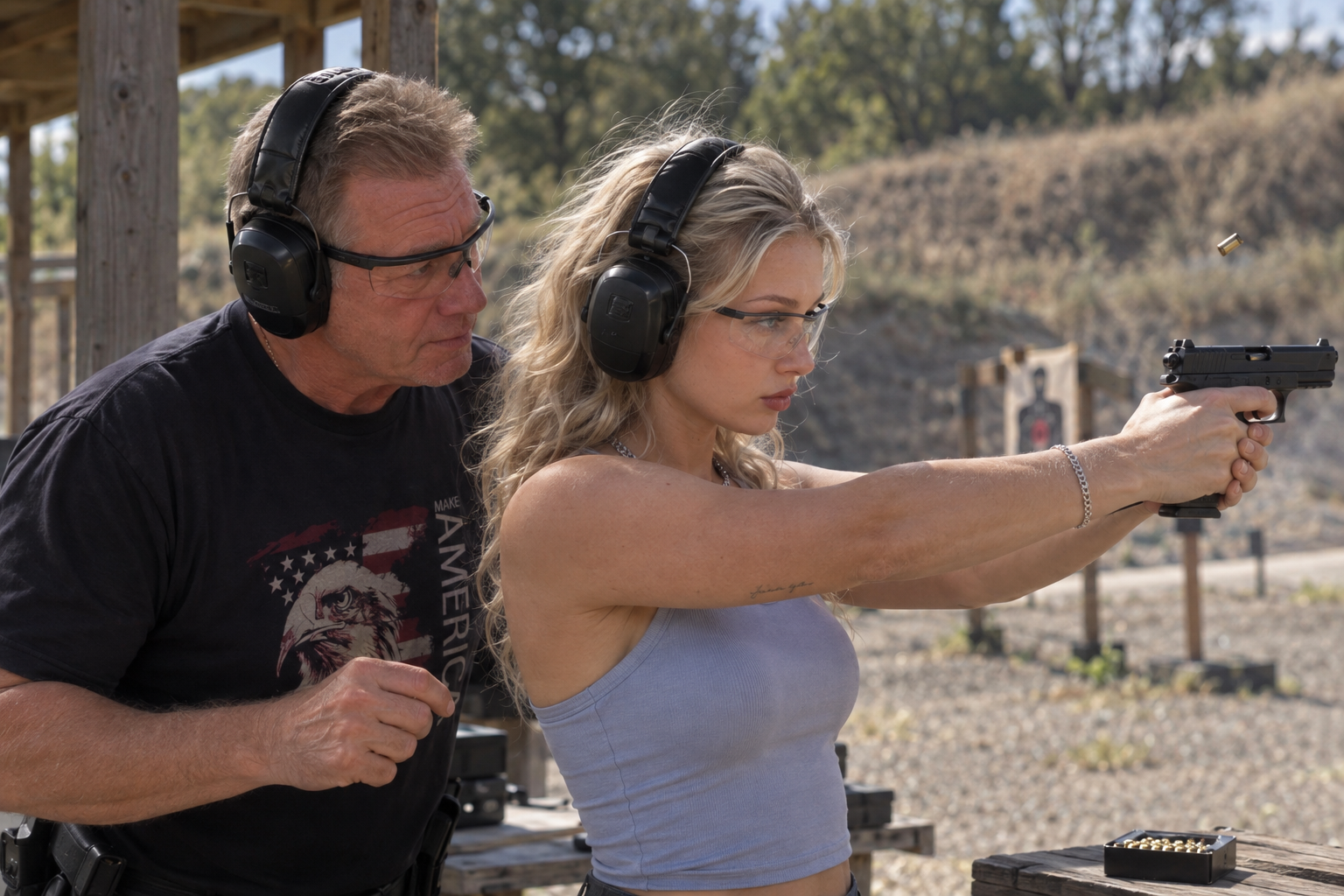
Course overview
The Range Safety and Proficiency course is designed to develop safe, responsible, and confident firearm handling while introducing and reinforcing the fundamental skills required for effective handgun operation.
The course combines range-safety instruction, firearm handling, fundamental marksmanship principles, and supervised live-fire exercises. Particular emphasis is placed on maintaining safe firearm handling habits throughout every phase of a range session.
Students are encouraged to focus on safety, consistency, accuracy, and control rather than speed.
Course modules
MODULE 01Range Safety
Students will ensure an understanding of the core principles of firearm safety
- Treat every firearm as though it is loaded.
- Never allow the muzzle to point at anything you are not willing to destroy.
- Keep your finger outside the trigger guard until you are on target and have made the decision to fire.
- Be certain of your target and what is in front of and beyond it.
Range-Specific Safety
* Range rules and procedures
* Firing-line procedures
* Safe muzzle direction
* Trigger-finger discipline
* Eye and hearing protection
* Handling firearms during cease-fire conditions
* Moving firearms to and from the firing line
* Safe interaction with other shooters
* Responding to unsafe conditions
MODULE 02Range Commands & Procedures
Students will become familiar with common range commands and their meaning.
Topics include:
* Range is hot / range is cold
* Load and make ready
* Ready / standby
* Commence firing
* Cease fire / stop
* Unload
* Show clear
* Bench or secure the firearm
Emergency Stop: Students will be instructed that anyone observing an immediate unsafe condition may call “CEASE FIRE” or “STOP.”
When a cease-fire command is given, students must immediately stop firing, remove their finger from the trigger, maintain the firearm in a safe direction, and await further instructions.
MODULE 03Safe Firearm Handling
Before beginning live-fire exercises, students will demonstrate basic firearm-handling competency.
Instruction includes:
* Identifying major firearm components
* Understanding firearm controls
* Verifying firearm condition
* Loading and unloading
* Magazine insertion and removal
* Opening and locking the action
* Safely presenting the firearm for inspection
* Maintaining muzzle awareness
* Maintaining trigger-finger discipline
Students must demonstrate satisfactory safe-handling practices before participating in live-fire exercises.
MODULE 04Fundamentals of Markmanship
Students will be introduced to a stable, balanced shooting position emphasizing:
* Balance
* Stability
* Body position
* Recoil management
Grip
Instruction will cover:
* Proper dominant-hand placement
* Support-hand placement
* Consistent grip pressure
* Maintaining control during recoil
Sight Alignment and Sight Picture
Students will learn:
* Proper alignment of the firearm's sights
* Relationship between the sights and target
* Maintaining a consistent visual reference
Where appropriate, instruction may also address the use of modern pistol-mounted optical sights.
Trigger Control
Students will practice:
* Controlled trigger movement
* Maintaining firearm alignment during trigger movement
* Avoiding unnecessary disturbance of the firearm
* Trigger reset concepts where appropriate
Follow-Through
Students will learn to maintain:
* Grip
* Visual focus
* Firearm control
* Stable position
throughout the firing process.
MODULE 05Supervised Live-Fire Exercises
Live-fire exercises are conducted progressively and under instructor supervision.
Exercises may include:
* Initial familiarization firing
* Single-shot accuracy exercises
* Controlled multi-shot exercises
* Accuracy and consistency exercises
* Target-group evaluation
* Identification and correction of common shooting errors
Exercise selection, shooting distance, and progression will be adjusted based upon student experience, demonstrated ability, range conditions, and instructor assessment.
The objective is safe and consistent firearm operation, not speed or competition.
MODULE 06Malfunction Awareness
Students will be introduced to common firearm interruptions and malfunctions.
Topics may include:
* Failure to fire
* Failure to feed
* Failure to extract or eject
* Failure to return to battery
* Recognizing potentially abnormal firearm or ammunition behavior
The emphasis of this module is recognizing that a problem has occurred, maintaining safe muzzle and trigger discipline, and determining when instructor assistance is appropriate.
MODULE 07Range Completion and Safe Departure
At the conclusion of live-fire training, students will review procedures for:
* Unloading the firearm
* Verifying that the firearm is clear
* Securing firearms before leaving the firing line
* Safely storing ammunition
* Cleaning the shooting area
* Proper firearm transportation and storage considerations
Learning objectives
- Demonstrate the fundamental rules of firearm safety.
- Understand and follow common shooting-range commands and procedures.
- Safely handle a firearm on and off the firing line.
- Demonstrate proper muzzle and trigger-finger discipline.
- Safely load, unload, and verify the condition of a firearm.
- Establish an appropriate shooting stance and grip.
- Apply the fundamentals of sight alignment and sight picture.
- Demonstrate appropriate trigger control and follow-through
- Perform basic accuracy exercises under instructor supervision.
- Recognize common firearm malfunctions and respond using safe procedures.
- Demonstrate safe firearm handling throughout a live-fire range session.
Prerequisites
- Students must be legally permitted to possess and handle the firearm used during the course.
- Students should have basic familiarity with their firearm. Students with little or no previous firearms experience should advise the instructor before the course so that appropriate instruction can be provided.
- The instructor reserves the right to restrict or discontinue a student's participation in live-fire exercises if the student cannot demonstrate safe firearm handling.
Course Materials
- Serviceable handgun appropriate for the course
- Eye protection (Firearms rated)
- Hearing protection (Firearms rated)
Required attire
- Close toed comfortable shoes
- Closed Shirt/Top Collar (T-Shirts, Crew Neck preferred)
- Range approved ear protection (Commercially available range ear protection)
- Firearms rated eye protection
- Cap (optional)
What to bring
- Note taking equipment (optional)
- Appropriate ammunition for the firearm
Assessment & evaluation
- Student performance will be evaluated throughout the course based upon:
- * Safe firearm handling
- * Muzzle discipline
- * Trigger-finger discipline
- * Ability to follow range commands
- * Safe loading and unloading
- * Proper application of basic marksmanship fundamentals
- * Consistency and firearm control
- * Overall adherence to range-safety procedures
- This course emphasizes demonstrated safe handling and improvement in fundamental shooting skills rather than achieving a particular competitive shooting standard.
Course policies
- Firearm safety is paramount, student who violate the basic rules outlined in this course will result in expulsion from the course.