
Firearms Safety, Ownership & Responsibilities.
This course provides foundational education on the safe handling, storage, ownership, and ethical/legal responsibilities associated with firearms. Emphasis is placed on preventing accidents, understanding core safety principles, basic firearm and ammunition familiarity, secure storage (especially around children and unauthorized persons), and the legal and social obligations of ownership.
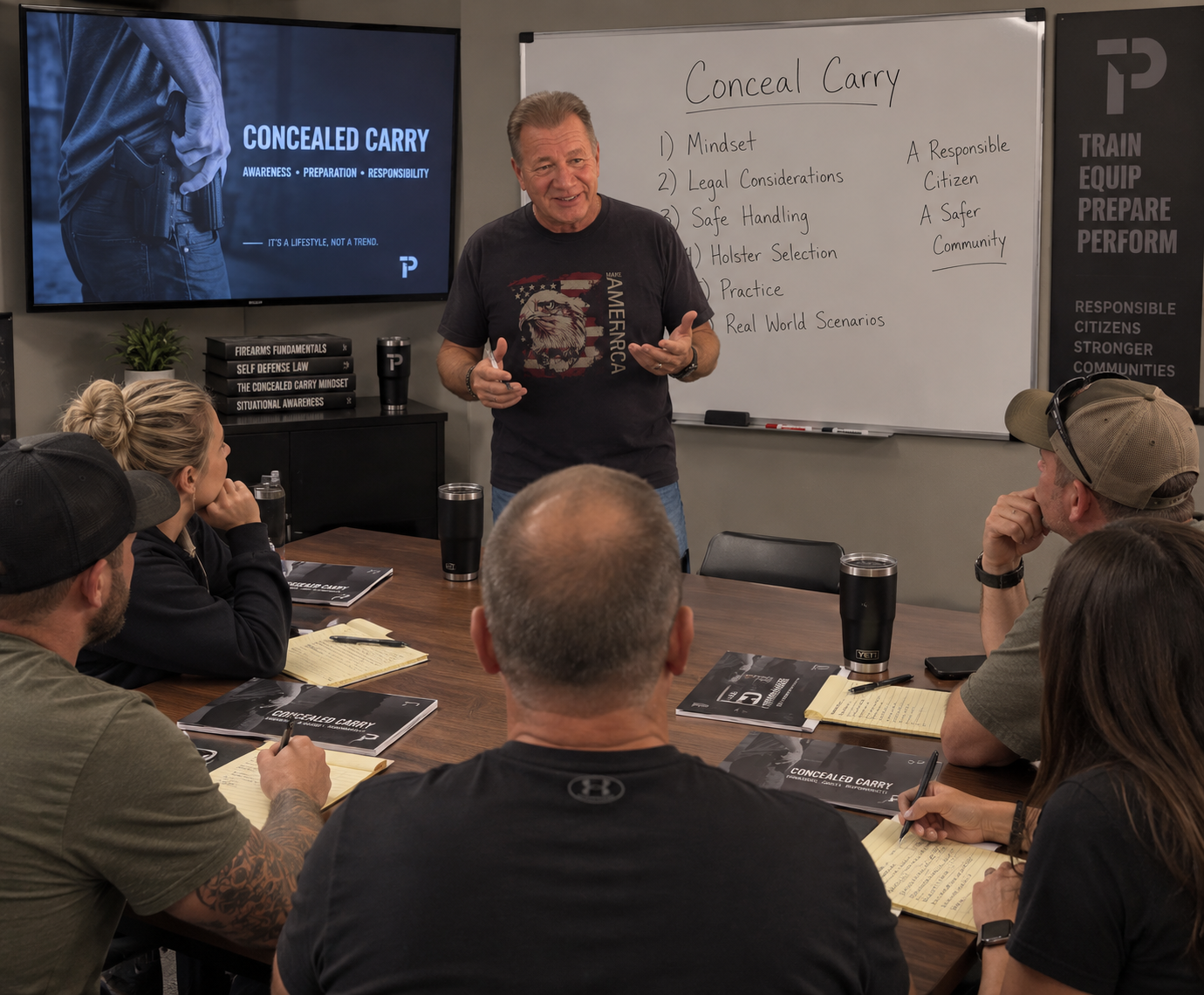
Course overview
Firearms Safety, Ownership & Responsibilities is a comprehensive foundational course designed to equip participants with the essential knowledge, mindset, and practical understanding required for the safe, lawful, and responsible possession and handling of firearms. Whether you are considering becoming a first-time owner, are a current owner seeking to strengthen your practices, or simply wish to better understand the responsibilities that accompany firearms in the home or community, this course provides a clear, structured pathway to competence and accountability.
The curriculum centers on preventing accidents and reducing risk through the consistent application of proven safety principles. Participants gain a thorough grounding in the fundamental rules of firearm safety, learning why these rules exist and how to apply them in everyday situations—at home, during transport, at the range, and in any environment where a firearm may be present. The course introduces the major categories of firearms (handguns, rifles, and shotguns), their basic components and functions, and the critical relationship between a firearm and its ammunition, all presented at a conceptual level that prioritizes safety over technical specialization.
A substantial portion of the course addresses secure storage and child access prevention. Students explore practical methods for keeping firearms and ammunition out of the hands of unauthorized users, with particular attention to households with children, visitors, or other vulnerable individuals. Emphasis is placed on the owner’s legal and moral duty to create and maintain secure environments, including discussions of storage devices, separation of firearms and ammunition, and effective communication with family members about firearm safety.
Legal and ethical dimensions of ownership receive careful treatment. The course outlines key federal principles governing purchase, possession, transfer, and prohibited persons, while repeatedly underscoring that state, provincial, and local laws vary widely and must be researched and followed by each individual. Topics include responsible interactions with law enforcement, the serious implications of negligent or unlawful use, and the broader social responsibilities that accompany the decision to own a firearm. The course remains deliberately value-neutral on the personal choice to own firearms; its sole focus is on ensuring that those who do so—or who live with firearms—do so with knowledge, care, and respect for the law and for the safety of others.
Throughout, the emphasis is on developing a lasting safety-oriented mindset rather than temporary compliance. Participants leave with a clearer understanding of how to handle, store, and maintain firearms safely; how to recognize and avoid common sources of accidents; and how to continue their education through further training, manufacturer resources, and official jurisdictional guidance.
Course modules
MODULE 01Introduction & Why Safety Matters
- Purpose of the course and importance of responsible ownership.
- Common causes of firearm accidents and how they are prevented.
- Mindset of accountability: the owner is the primary safety mechanism.
MODULE 02Fundamental Rules of Firearm Safety
Core rules (variations exist; common formulations include):
(1). Treat every firearm as if it is loaded.
(2). Always keep the muzzle pointed in a safe direction.
(3). Keep your finger off the trigger until ready to shoot.
(4.) Be sure of your target and what is beyond it.
Additional practices: know how the firearm operates, use correct ammunition, wear eye/ear protection when shooting, keep the firearm unloaded until ready for use, do not rely solely on mechanical safeties.
Safe handling demonstrations and transfer protocols.
MODULE 03Firearm Types, Parts & Basic Operation
- Overview of handguns (revolvers and semi-automatics), rifles, and shotguns.
- Major components (frame/receiver, barrel, action, sights, safety mechanisms).
- Ammunition basics: cartridge components, caliber/gauge matching, and why correct ammunition matters.
- Conceptual understanding of how firearms function; importance of the owner’s manual.
- Malfunctions and stoppages at a high level (safe response principles).
MODULE 04Safe Handling, Storage & Child Access Prevention
- Safe pick-up, carry, loading/unloading concepts, and clearing procedures.
- Home and vehicle storage options (safes, locks, separation of firearms and ammunition).
- Legal and practical responsibilities regarding children and unauthorized access.
- Talking to children about firearms; positive role modeling.
- Cleaning, maintenance, and inspection overview (safety first).
MODULE 05Legal Framework & Ownership Responsibilities
- High-level federal principles (e.g., prohibited persons, background checks, transfer rules, National Firearms Act concepts where relevant).
- Importance of researching and complying with state/provincial and local laws (purchase, possession, transportation, carry—open/concealed/permitless where applicable, use of force/self-defense standards).
- Sales, transfers, and reporting requirements.
- Encounters with law enforcement.
- Ethical and community dimensions of ownership.
- Note: This module is general; participants must obtain jurisdiction-specific legal advice or official resources.
MODULE 06Range Safety, Marksmanship Fundamentals (Optional/Introductory) & Continued Learning
- Range rules and commands.
- Basic shooting fundamentals (stance, grip, sight alignment/picture, trigger control, breath control, follow-through) at an introductory level.
- Benefits of ongoing training and practice.
- Resources for further education (certified instructors, hunter education, advanced safety courses).
MODULE 07Review, Assessment & Resources
- Comprehensive review.
- Written knowledge assessment and/or practical safe-handling demonstration (as applicable).
- Discussion of local resources, emergency contacts, and continuing education.
Learning objectives
- State and consistently apply the fundamental rules of firearm safety.
- Identify major types of firearms (handguns, rifles, shotguns) and their basic parts/functions at a conceptual level.
- Explain safe handling, loading/unloading concepts, and the importance of treating every firearm as loaded.
- Describe proper storage, child access prevention, and secure transportation principles.
- Summarize key federal principles and the need to research applicable state/local laws on purchase, possession, transfer, prohibited persons, use of force, and carry.
- Recognize owner responsibilities regarding maintenance, accidents prevention, interactions with law enforcement, and ethical conduct.
- Demonstrate or describe basic safe handling practices (where practical components are included) and identify resources for further training.
Prerequisites
- Course handbook or study guide (instructor-provided or equivalent, e.g., materials aligned with recognized safety standards such as those from NRA fundamentals, NSSF, or jurisdictional safety certificate guides).
- Notebook and writing materials.
- Optional: Manufacturer manuals for personal firearms; eye/ear protection if range component is included.
- No live ammunition in classroom settings unless under strictly controlled, approved conditions.
Course Materials
- Course material provided as part of course fees
Required attire
- Comfortable clothing, closed toed shoes.
What to bring
- Note taking tool (paper or electronic)
- Firearm (if applicable) / Ammo
Assessment & evaluation
- Participation and demonstration of safe handling principles (where practical elements are included).
- Written quiz or exam covering safety rules, storage, basic operation concepts, and responsibilities (passing score typically 70–80% or higher, depending on program standards).
- Optional practical qualification or safe-handling demonstration.
- Certificate of completion issued upon successful completion (does not constitute a legal permit or license).
Course policies
- Safety First: Any unsafe behavior may result in immediate removal from the course.
- Attendance: Full attendance required for certificate in most formats.
- Legal Compliance: Participants are solely responsible for knowing and following all applicable laws. Instructors provide educational information only and do not give legal advice.
- Accommodation & Conduct: Respectful environment; reasonable accommodations as needed. Disclaimer: Completion does not authorize ownership, carry, or use beyond what the law permits the individual. Laws change; verify current requirements.
Further resources
- Official jurisdictional firearm safety certificate or hunter education materials.
- Manufacturer owner’s manuals.
- Established safety organizations’ fundamental rules and literature (e.g., NRA Gun Safety Rules, NSSF resources).
- Local certified instructors and ranges for hands-on training.
- Government websites for current laws (ATF, state attorney general/DOJ sites, etc.).